
Hi-Point HushPoint .45 Review. Better than exppected?
Hi-Point HushPoint 45 Review
Hi-Point Enters the Suppressor Market
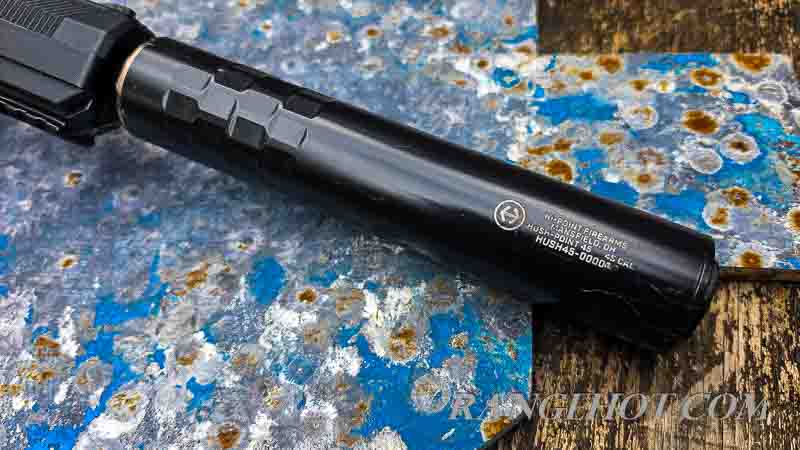
When many folks think of Hi-Point, I doubt silencers are the first thing that comes to mind. The company has built its reputation around affordable firearms that simply work, but with the introduction of the HushPoint .45, Hi-Point has stepped into an entirely new market.
Could a company known for value-oriented firearms produce a silencer capable of competing in today’s crowded market? I recently had the opportunity to spend some time behind the HushPoint .45; I came away with a much better understanding of what Hi-Point was trying to accomplish.
Construction and Design

One of the first things that stood out was the suppressor’s straightforward design.
The HushPoint utilizes a user-serviceable monocore design housed in a 7075 aluminum tube with a stainless steel host cap. Being able to disassemble the suppressor for cleaning is an important feature, especially for shooters who expect to put a lot of rounds through it over the years.
Another pleasant surprise is that the suppressor utilizes the industry-standard HUB mounting pattern.
While it ships as a direct-thread suppressor and intentionally omits a Nielsen/piston device because it was designed around fixed-barrel firearms, you are not locked into that configuration. Owners who wish to use other mounting systems can install HUB-compatible mounts or compatible booster assemblies from other manufacturers.
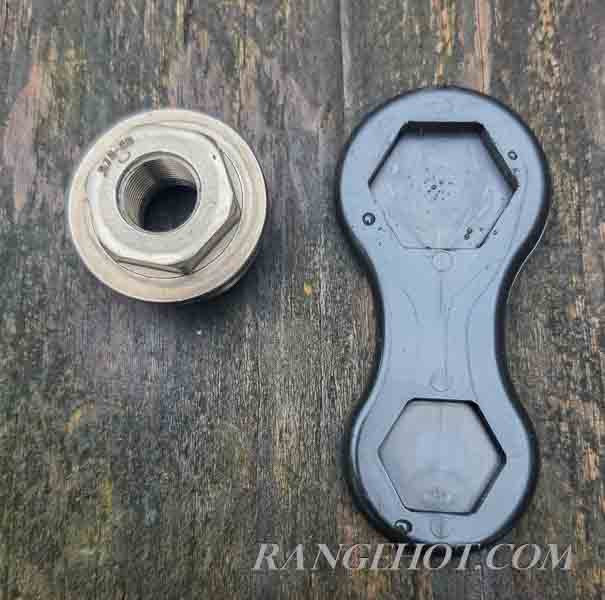
Included wrench to disassemble the can.
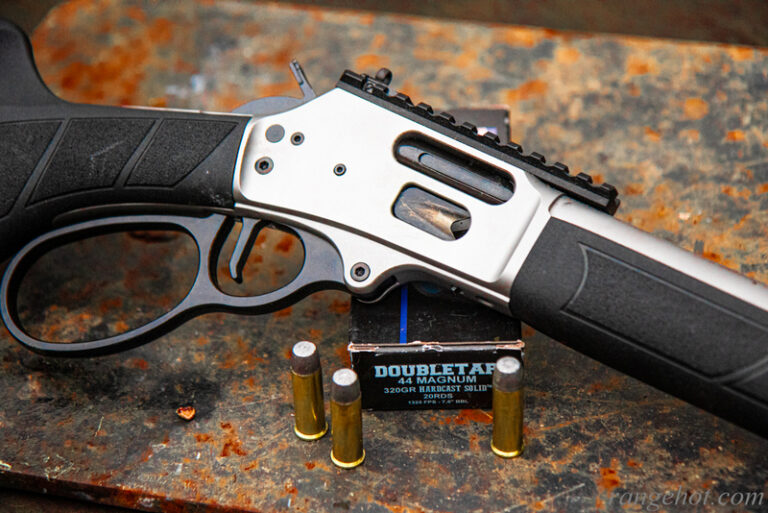
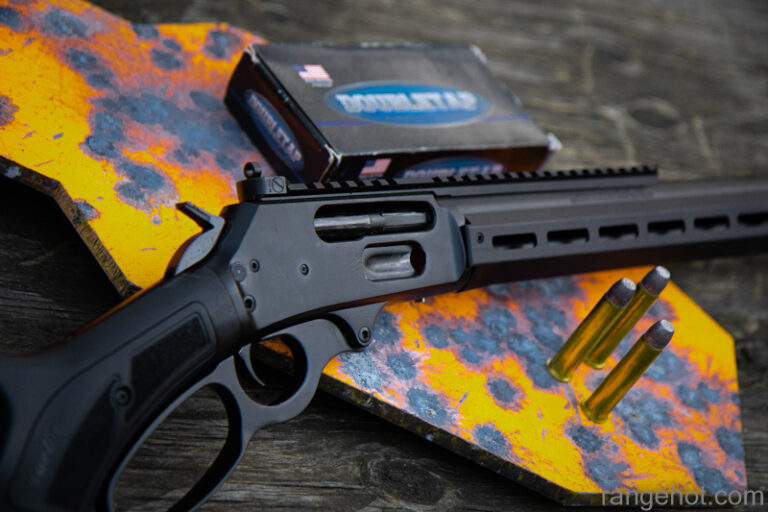
Mounted on several hosts such as the Hi-Point JHP as reviewed here and the Mad Pig Customs lever gun as reviewed here, the HushPoint performed well. Recoil impulse remained pleasant, reliability was excellent during my testing, and the silencer did exactly what I expected: reduce blast, soften the report, and make shooting considerably more enjoyable.
A Conversation at CanCon
While attending CanCon, I also had an opportunity to speak with David from MKS Supply about the HushPoint.
Hearing the design philosophy directly from the manufacturer provided useful insight into what Hi-Point was trying to accomplish. Rather than building the lightest or most expensive suppressor on the market, the goal was to create a dependable, serviceable suppressor that remained accessible to everyday shooters.
After my own time on the range, I can certainly understand that philosophy.
Final Thoughts
The HushPoint .45 probably won’t replace every premium suppressor currently on the market, nor is it trying to. However, I do see the benefit of more manufacturers getting into silencers. With more coming to the market and new engineers involved in design, we will have a greater selection available as well as more opportunities for innovation.
Hi-Point appears to have focused on delivering solid performance, practical features, and genuine value.
The inclusion of HUB compatibility, 1/2 x 28 and .578 x 28 end caps, user-serviceability, and straightforward construction makes it far more versatile than many people might initially assume.
If you’re looking for a .45/9mm caliber silencer that offers a good balance of performance, simplicity, and affordability, the Hi-Point HushPoint .45 deserves serious consideration. Hi-Point also offers rimfire cans in the HushPoint line.
Pros
User-serviceable design
HUB compatible
Direct-thread simplicity for fixed-barrel hosts
Reliable during testing
Good overall value
Includes multiple thread adapters
Cons
Ships without a Nielsen device (appropriate for its intended use but something buyers should understand)
Premium suppressors may offer additional refinement depending on your priorities.
Final Verdict
Hi-Point entered the suppressor market with a clear objective: produce a dependable, affordable suppressor that emphasizes practical performance over unnecessary complexity.
Based on my time behind the HushPoint .45, I’d say they accomplished exactly that.
Specfications
Length: 7.87″
Weight: 12.8 oz.
Host Cap Thread: 1/2 x 28 & .578×28
Full Auto Rated: NO
Pistol Caibers: 30 Super Carry, 380Auto, 9MM, 40S&W, 10mm 45Auto
Rifle Calibers: .300BLK Sub Sonic, 5.7x28mm
Body – 7075 Aluminum
Monolithic Baffle – 7075 Aluminum
Muzzle Cap – 7075 Aluminum
Host Cap: 17-4 Stainless Steel
Hush-Point 22 Thread 1/2×28
Hush-Point 45 Thread 1/2×28 & .578×28
MSRP: $439
Acknowledgments